

In parts of Ghana, where healthcare facilities are sparse, distances long and patient volumes high, diagnosis often comes too late. Today, mobile X‑ray units of Dutch medical technology company Delft Imaging travel to communities, bringing something transformative to the point of care: the ability to screen on site. This shortens waiting times, enables faster diagnosis and timely treatment, and improves workflow efficiency in demanding care environments. Powered by artificial intelligence, these portable systems can detect diseases such as tuberculosis within minutes, shifting care from reactive to preventive, bringing care closer to those who need it most.
The work of Delft Imaging has become a global player in one of healthcare’s most overlooked frontiers: diagnostics. With end-to-end diagnostic solutions, artificial intelligence and strong local partnerships, the company makes early detection possible in even the hardest-to-reach places. Its story shows how innovation, public backing and patient capital can come together to reshape healthcare systems and why the Netherlands continues to punch above its weight in medtech.
Diagnostics: the invisible backbone of healthcare
If modern medicine has an unsung hero, it is diagnosis. Before a single pill is prescribed or a scalpel lifted, clinicians must first answer a fundamental question: what is wrong?
Yet diagnostics remains one of the hardest parts of healthcare to fund, particularly in low- and middle-income (LMIC) countries. Because it does not immediately resolve a problem, it identifies one. That nuance complicates its economics. A scan may save a life, but it does not generate revenue as directly as a cure.
“Access to good diagnostics is not a luxury, but a fundamental right, especially where healthcare is least available,” says Jasper Klapwijk, Health Sector Lead at Invest International. “By closing critical gaps in diagnostic care, you improve health outcomes and lay the foundations for long-term economic development.”
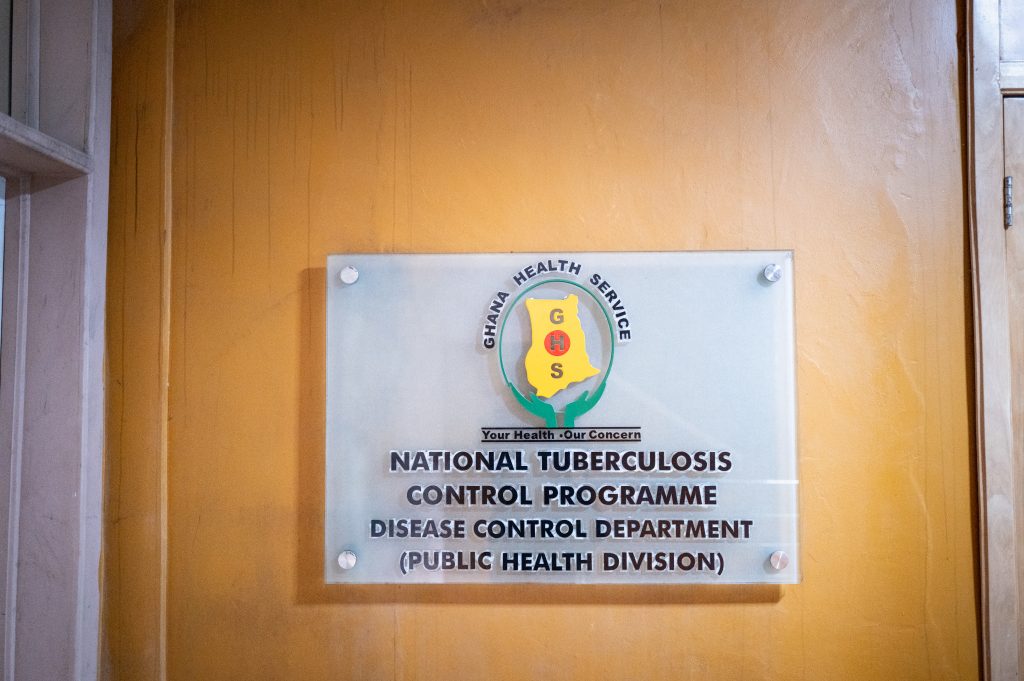
As a result, diagnostic infrastructure often depends on public programmes and blended finance. Ghana provides a telling example. Through a national tuberculosis programme, Dutch-supported mobile imaging solutions have been deployed at scale. Although only a fraction of scans are used for TB detection, government backing has enabled a broader diagnostic network to emerge, strengthening the healthcare system overall.
Delft Imaging in Ghana
With support from Invest International, Delft Imaging has strengthened diagnostics for both Covid-19 and tuberculosis in Ghana using AI-driven computer-aided diagnostics (CAD) to analyse chest scans. In regions where specialists and equipment are scarce, this enables faster, more accurate diagnosis and earlier intervention.
“What makes the TB Detection project in Ghana so important is that it shows how you can build a diagnostic system that works in practice,” says Nontas Papiadimitrou, Senior Investment Manager at Invest International. “While tuberculosis detection accounts for only part of the scans, the programme still creates infrastructure embedded in the National Health structure that communities rely on every day, thereby amplifying the impact of the investment”
The impact is cumulative: diagnostic facilities are brought closer to the patients, which results in earlier diagnosis enabling earlier treatment, which reduces transmission and improves survival rates. At the same time, the infrastructure put in place is not limited to tuberculosis alone, it can also be used to detect other conditions, strengthening the overall resilience of the healthcare system.
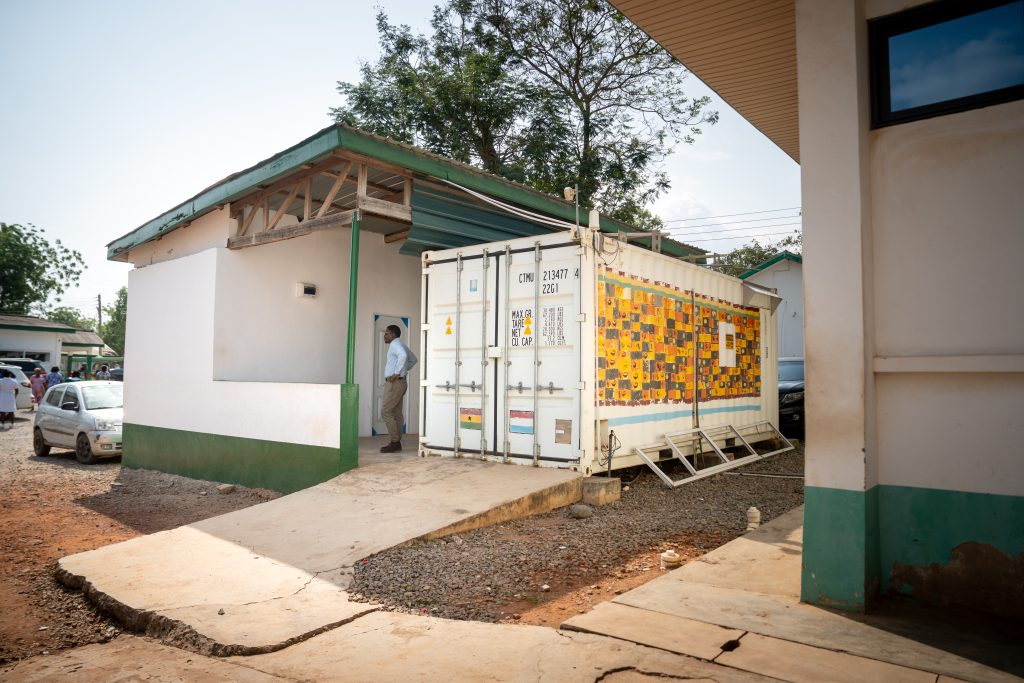
“So far, 54 mobile clinics have been deployed across Ghana. To date, more than 2 million people have been screened for tuberculosis,” says Elsie Appeadu, Managing Director of Delft Imaging in Ghana.
Across 54 sites, digital X-ray systems have been installed in clinics that previously had no access to such technology. Many of these systems are housed in repurposed shipping containers, designed to operate in challenging environments, ranging from remote and difficult terrain to conditions marked by dust and extreme heat.

From innovation to global impact: BabyChecker
Delft Imaging’s rapid growth, recognised with the Dutch FD Gazelle Oryx Prize, has attracted attention from global health financiers and development institutions, placing the company firmly on the international stage.
Delft Imaging operates at the intersection of imaging technology and artificial intelligence. Its portfolio ranges from portable X-ray systems to cloud-based software that automatically interprets scans, reducing reliance on scarce radiology expertise.
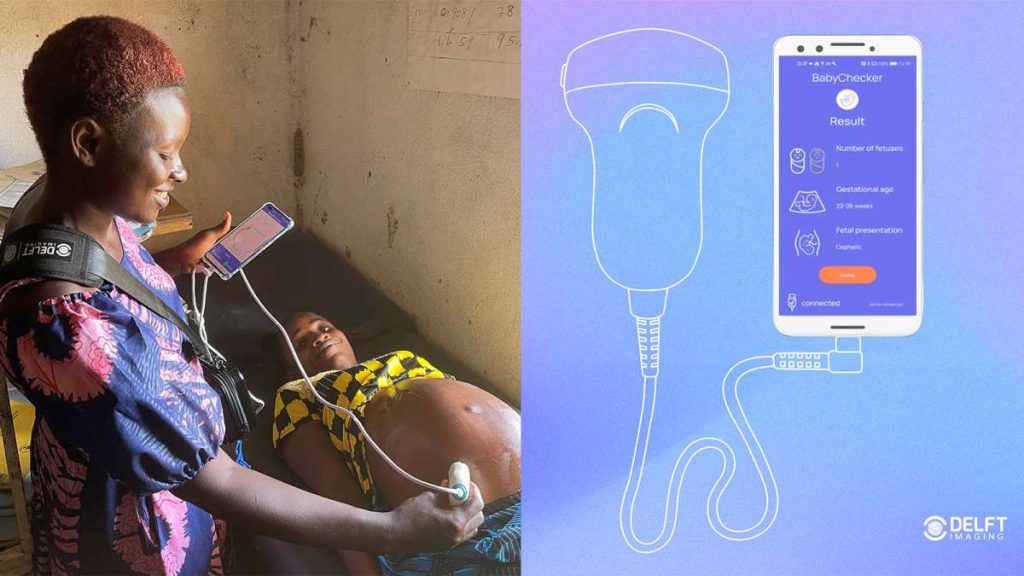
The company gained international traction during the Covid-19 pandemic with a cloud-based screening platform used worldwide. Today, its focus has expanded to long-term health challenges, from infectious diseases to maternal care. One example is Babychecker, a smartphone-enabled ultrasound tool that uses AI to identify high-risk pregnancies.
With minimal training, frontline healthcare workers can detect complications early and refer patients in time. With support from Invest International, the solution is now being introduced in Uganda in partnership with Population Services International.
The Dutch edge
Delft Imaging’s trajectory reflects a broader Dutch strength in diagnostics and medical imaging. The Netherlands has long been a hub for innovation in this field, from Philips’ NatLab to today’s ecosystem of universities, hospitals, start-ups and global companies.
What sets Dutch medtech apart is its balance between cutting-edge science and practical application. Technologies are not only advanced; they are designed to function in real-world conditions, including low-resource settings.
Looking ahead, the greatest opportunities lie in improving access and affordability. Low-cost MRI and CT technologies are expected to play a key role in expanding advanced diagnostics globally. At the same time, ultrasound—portable, flexible and relatively inexpensive—is emerging as a powerful alternative for remote environments.
Financing where other financiers are reluctant
Scaling such innovations demands capital willing to take risks where commercial investors often hesitate. Invest International plays a catalytic role by providing development financing that enables companies to enter new markets, test their products and prove their value. Once that first step is achieved, attracting commercial funding becomes far more feasible.
The Ghana tuberculosis programme illustrates this model. Early-stage backing helped Delft Imaging demonstrate both impact and viability, unlocking further growth and recognition. Yet structural challenges remain. “Healthcare infrastructure is not a foreign-currency-earning sector,” Papiadimitrou notes. “In times of economic pressure, diagnostics are often not the first priority, making scaling complex, even when impact is proven.”


