At the NFP World Food Day event, co-organized with the Ministry of Foreign Affairs and the Ministry of Agriculture, Fisheries, Food Security, and Nature, Invest International, co-hosted a session to explore how finance can drive sustainable food system change. With insights from Wageningen University & Research, Rabo Partnerships, and companies like Fiber Foods and Peel Pioneers, the event highlighted the importance of a holistic approach, emphasizing strategic investments in areas like alternative proteins and circular economy solutions. It also recognized the need to engage all key players—producers, traders, retailers, financial institutions, and consumers—to drive meaningful change.
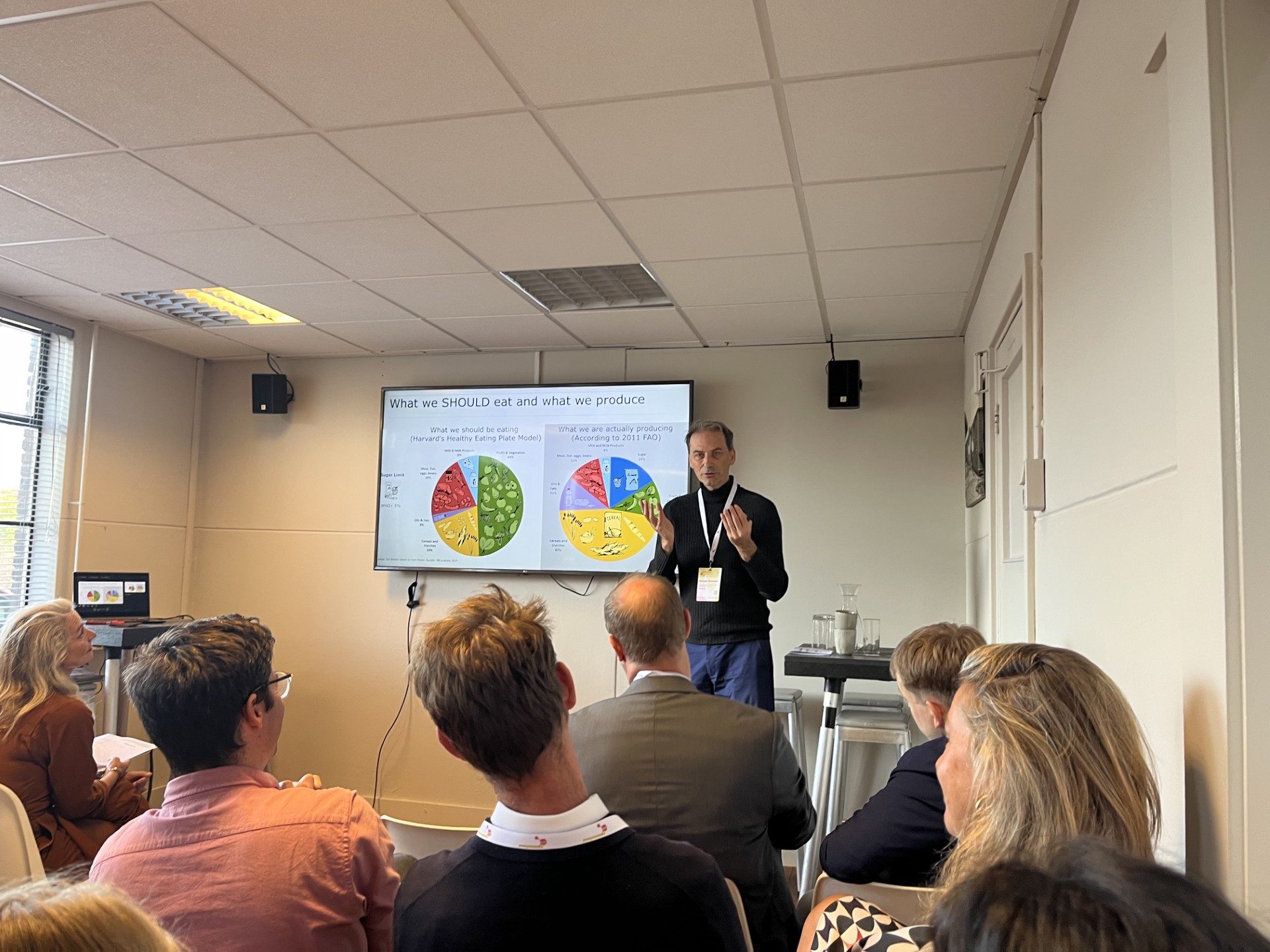
Introduction to Food Systems by Herman Brouwer, Wageningen University & Research
Herman Brouwer from Wageningen University & Research emphasized the importance of systems thinking in driving sustainable food system change. He highlighted three key goals:
- Food security and health
- Improving livelihoods and reducing inequality
- Addressing climate change and environmental protection
Brouwer stressed that transformation requires not only fostering innovation but also reducing the dominance of the current food system. He compared this to “hospice care,” where parts of the existing system need to be gradually phased out, even if it means challenging powerful interests that resist change. He also noted that progress comes with trade-offs, where improving one area often sacrifices another. From Invest International’s perspective, this means investing strategically to maximize systemic change and impact.
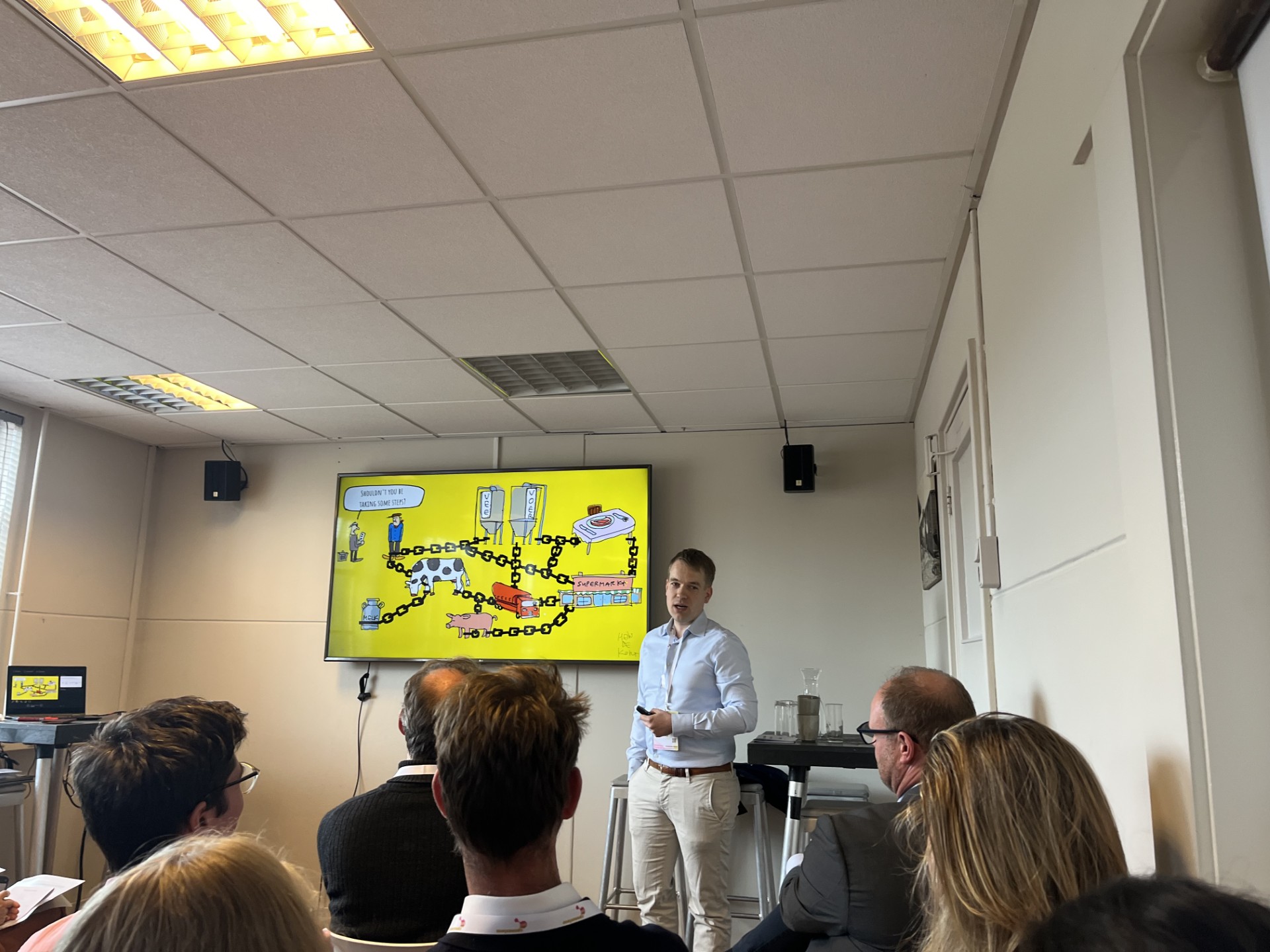
Introduction to Financial Flows in Food Systems by Bart van Kranenburg, Rabo Partnerships
Bart van Kranenburg from Rabo Partnerships discussed the financial challenges of transitioning food systems in the Netherlands and Europe. He emphasized that systemic change cannot rely solely on farmers—financing is needed throughout the entire supply chain, from farm to fork. To achieve this, an estimated €350 billion to €400 billion per year is required, highlighting the need to track financing flows.
Van Kranenburg outlined three key challenges for commercial banks:
- Funding: Long-term financing, especially in emerging markets, is difficult to secure.
- Risk: Climate risks and other uncertainties are difficult to manage, despite the existence of risk-mitigation tools.
- Operational Expenses: Financing across the entire supply chain comes with high operational costs.
Building on the challenges outlined by Bart van Kranenburg, Raymond Beimers, Head of AgriFood at Invest International, explained how Invest International supports Dutch businesses abroad, particularly where traditional banks cannot. Drawing from his banking experience, Raymond noted that while banks often say no due to higher risks, Invest International can say yes.
Raymond emphasized, “By stepping in when there is market failure, we take on risks that others can’t. Our flexibility allows us to fill a gap left by Dutch commercial banks, especially in financing smaller export deals that larger banks have retreated from due to operational challenges.”
He also stressed that Invest International’s financing instruments are not the ultimate solution; rather, they aim to serve as a catalyst for businesses to attract follow-up funding, which needs to be picked up by commercial banks.
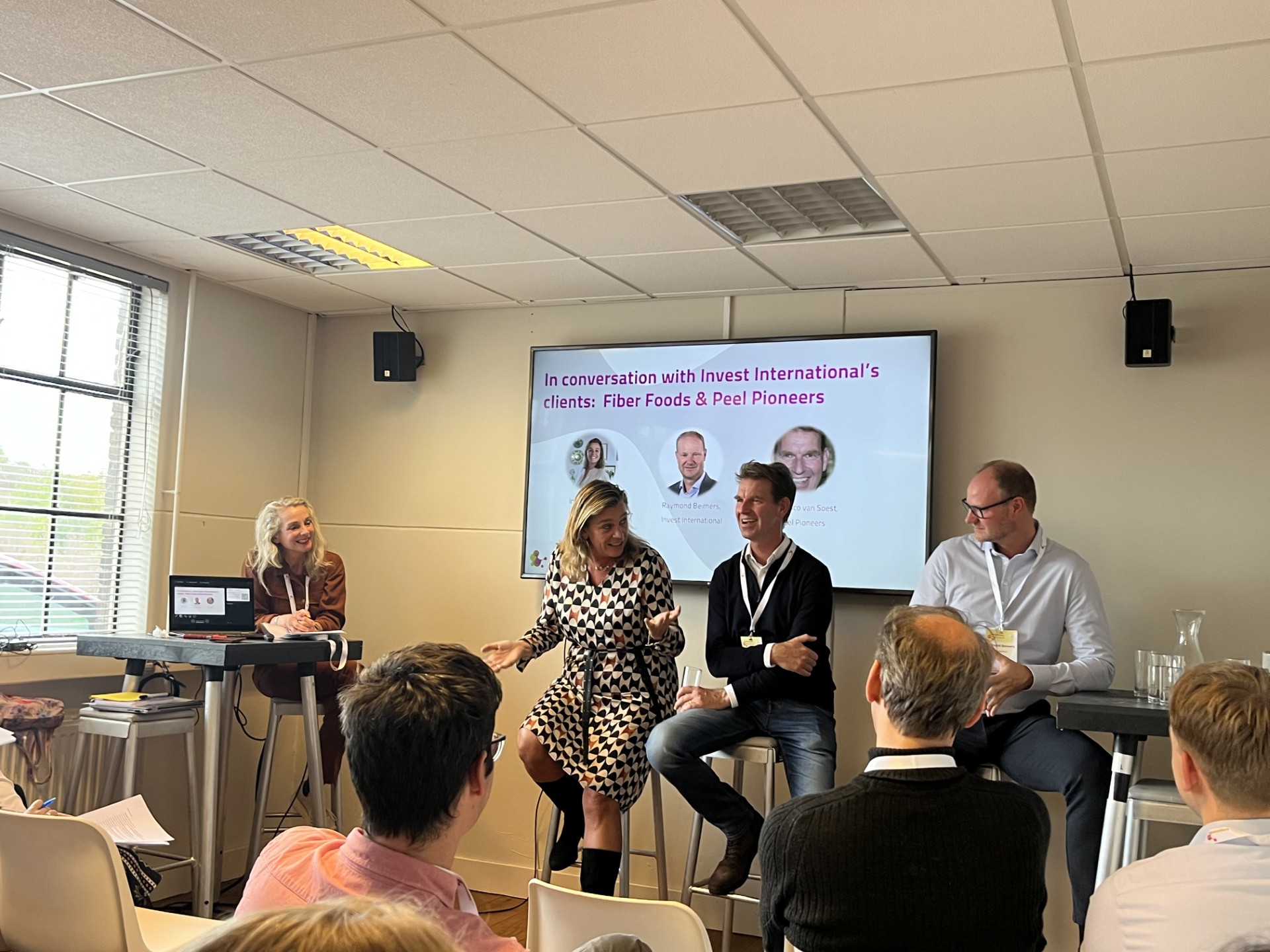
from Fiber Foods, Remco van Soest from Peel Pioneers, Raymond Beimers from Invest International
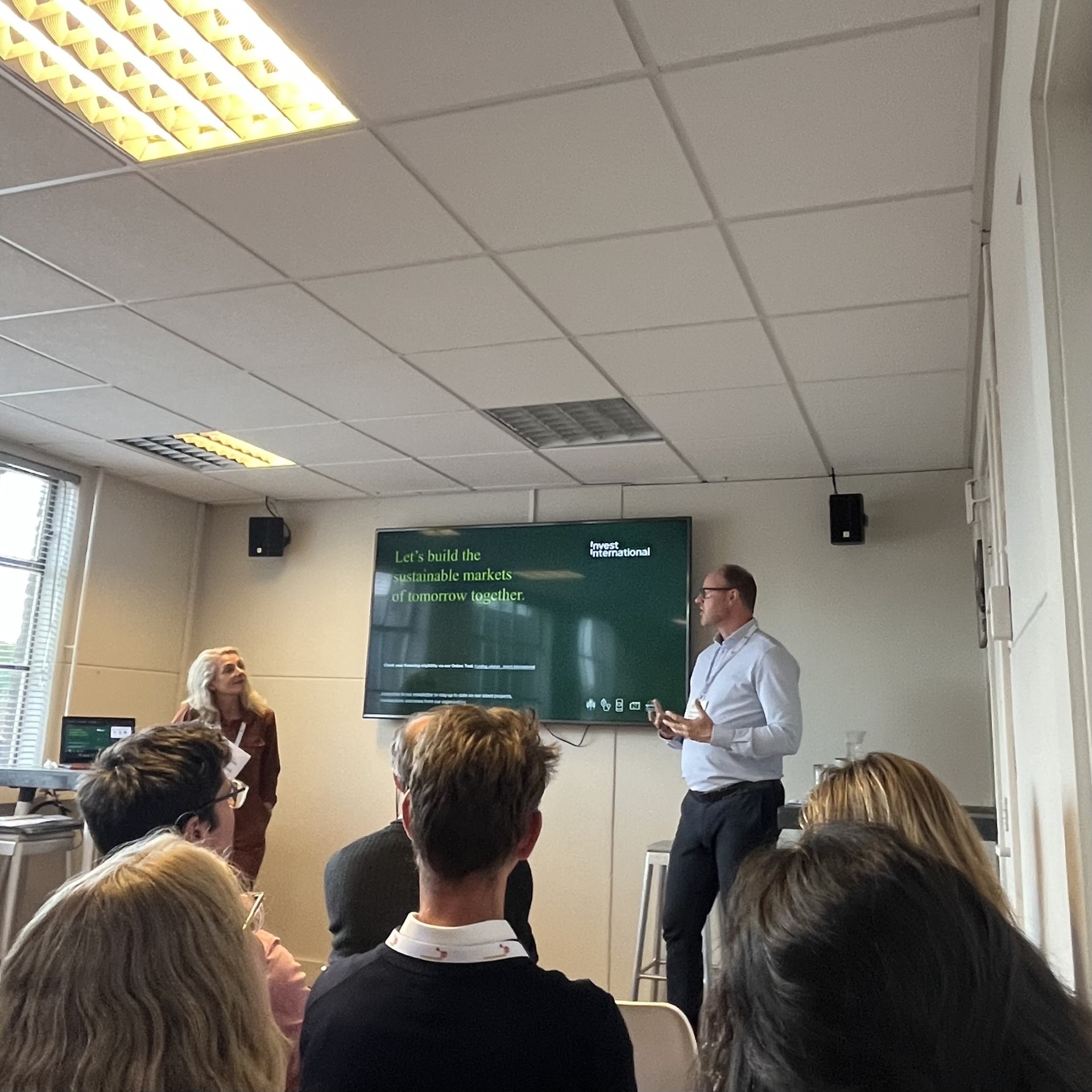

Panel Discussion: Fiber Foods and Peel Pioneers—Innovating for a Sustainable Food Future
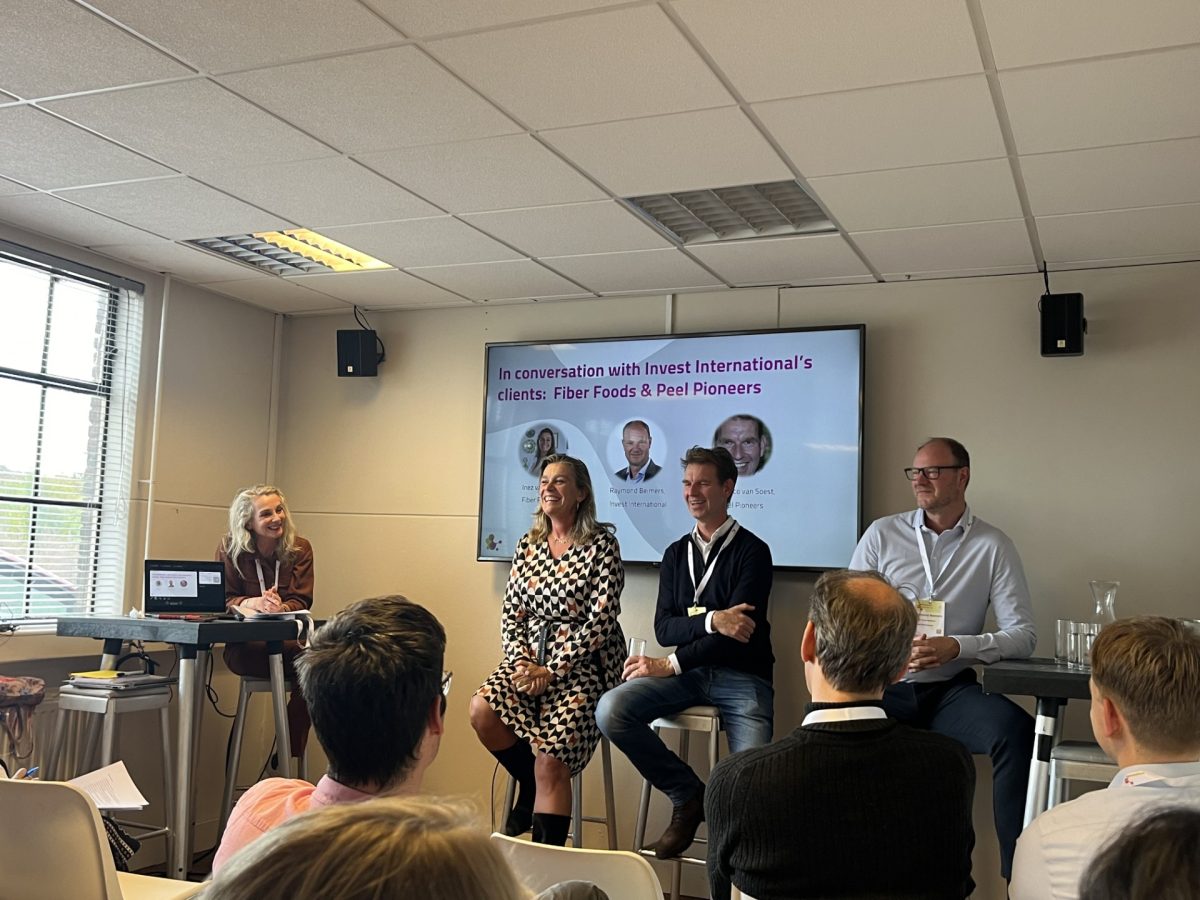
The panel session brought together Inez van Oord from Fiber Foods and Remco van Soest from Peel Pioneers—both clients of Invest International—alongside Raymond Beimers, Head of AgriFood at Invest International, to discuss how strategic financing partnerships are driving food system transformation.
Inez introduced Fiber Foods as a Dutch impact-driven startup that has developed a jackfruit value chain in Uganda. She emphasized that jackfruit, with its meaty texture and high fiber content, is increasingly popular as a plant-based ingredient for vegetarian, vegan, and blended meat products. Inez highlighted how Fiber Foods adds value at the source by drying jackfruit locally in Uganda, empowering women farmers and contributing to the protein transition while addressing the global fiber deficit in our diets.
Remco followed up by presenting Peel Pioneers, a Dutch biotech company transforming citrus waste into valuable products such as oils, cubes, and fiber. He explained that their Finix citrus fiber is a natural binder used in plant-based meat alternatives, replacing traditional additives like gelatin. Remco shared that Peel Pioneers collects citrus peels from supermarkets, converting them into 100% usable ingredients, which supports both the alternative protein market and the global food industry. He also noted the company’s rapid scaling, with plans to expand operations to Spain
Key takeaways from the panel discussion
- Building new value chains and gaining market access requires initial funding
For startups like Fiber Foods, creating a new value chain from scratch—such as their jackfruit supply chain in Uganda—necessitates substantial funding It was a priority for them to pay farmers upfront and this required funding at the start. Additionally, meeting the regulatory standards of the buyers would not have been possible without Invest International’s financing. Invest International also prefinanced the first shipment to Europe, helping Fiber Foods secure critical market access.
- Scaling sustainable solutions demands local partnerships
Both Fiber Foods and Peel Pioneers emphasized the importance of local markets and partnerships. Fiber Foods is exploring regional sales opportunities in Uganda, and Peel Pioneers is working with Spanish juicers to source citrus peels. By embedding themselves locally, these companies contribute to the circular economy and generate regional impact.
- Navigating financial challenges in scaling operations
Access to capital is critical for scaling companies, particularly in the mature and capital-intensive food industry, where substantial funding is required to achieve the scale needed for profitability. Venture debt remains a significant challenge, especially for scaling companies like Peel Pioneers, who ideally need a combination of equity and loans to expand. Fiber Foods expressed a need for bridge loans to avoid having to raise equity in unfavorable conditions. Both companies highlighted how alternative financing options, such as those provided by Invest International, are crucial for their growth.
- Fostering an environment for risk-takers
Raymond Beimers emphasized that transforming the food system requires people like Remco and Inez who are willing to take risks and who prioritize impact without the assurance of getting paid for it. Collaboration between investors, government, and entrepreneurs is essential for creating an environment where innovators like them can thrive. Invest International’s involvement provides a model for supporting sustainable ventures that face high risk but offer significant social, environmental and economic returns.
Learn more about our Agri-Food approach and discover how Invest International can support your business in driving sustainable food system change. Let’s work together to create lasting impact.