
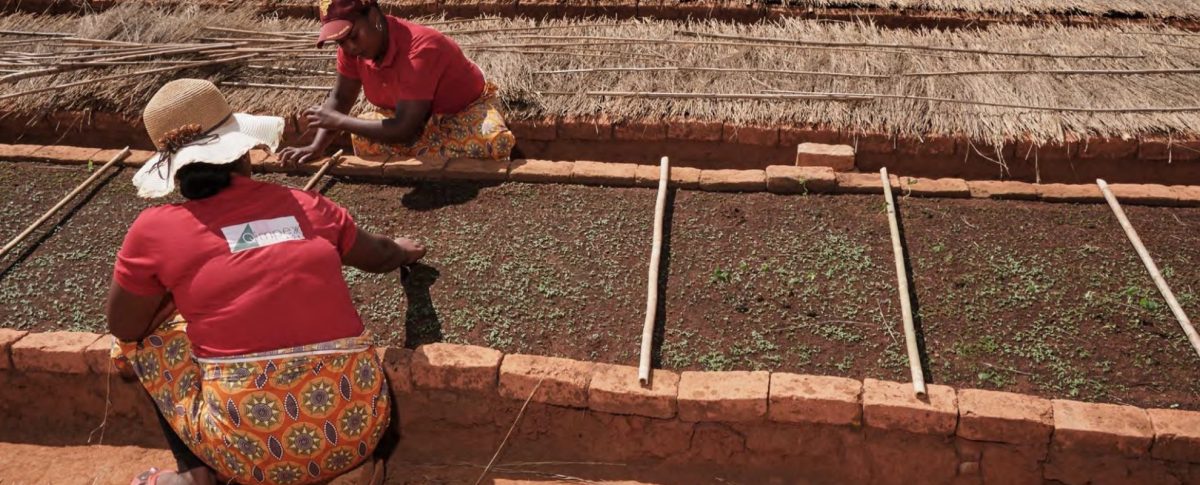

Madagascar's recent climate change-caused drought reduced agricultural production, placing about 1 million people in food insecurity. Dutch SME Arnold Suhr, a leading trader in raw materials for the food and pharmaceutical industries, is working towards sustainable quinine production that helps farmers diversify their income and improve resilience to extreme weather.
Quinine, an organic substance used to treat malaria and add a bitter taste to soft drinks, comes from the bark of cinchona trees that occur naturally on the island. Since 2014, Arnold Suhr has enabled the plantation of 1 million such trees on the land of 600 farmers. The company also supports farmers in generating additional income by cultivating 20 other endemic species.
To further shorten the quine supply chain and become the world’s first sustainable quinine producer, the Hilversum company started the local Qimpexx factory in Madagascar. We provided a loan via the Dutch Good Growth Fund (DGGF), which we manage on behalf of the Ministry of Foreign Affairs, to facilitate the factory’s development.

Farmers earn around €300 in extra yearly income annually by planting cinchona, a 50 per cent increase of their average annual income.
By promoting intercropping, which involves growing two or more crops in proximity, the company encourages farmers to grow their own food.
In small, interactive group sessions, the collaborating farmers learn how to cultivate their cinchona trees and protect them against fire.
By creating a large-scale network of 8.000 farmers, the company will facilitate planting more trees, thus increasing CO2 absorption.


