


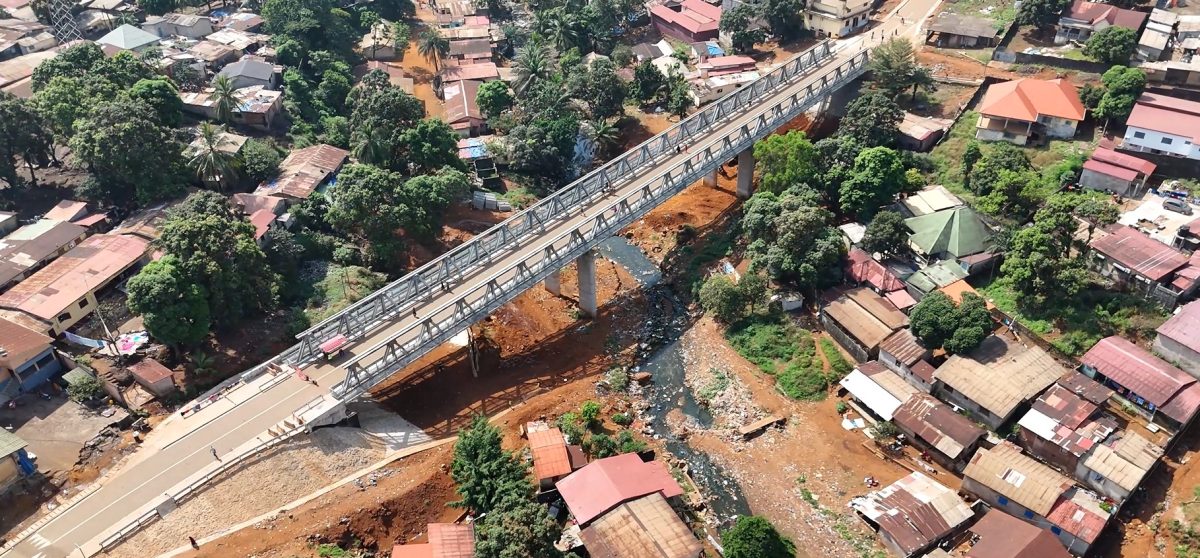

The densely populated port city of Conakry, capital of Guinea in West-Africa, lies between estuaries and ravines. These natural barriers isolate districts from one another and make travelling to work time-consuming and public facilities like hospitals difficult to access. The construction of five steel bridges and 12 kilometres of road surface will change this.
Improve access to urban areas, create better economic opportunities for inhabitants plus faster routes to hospitals and other facilities in a lasting manner. Those are some of the goals of the Five Bridges project in Conakry. A project that is jointly executed by Ballast Nedam, Dijkstaal International, Invest International and the governments of the Netherlands and Guinea.
The bridges project has been partly made possible with financial support from the DRIVE programme. On 21 April 2021, the Guinean Ministry of Economy and Finance and the Dutch Embassy in Dakar signed a grant agreement worth € 30 million for this. Together with a loan from Invest International and credit insurance from Atradius Dutch State Business (ADSB), the financing is secured. The total project costs over € 60 million and is due for completion in 2025.
The image below shows the situation before, the picture above shows how it is now.

The improved access is expected to stimulate private sector development in the city and create economic opportunities.
Building the bridges contributes to local job creation and the new roads improve access to work for many inhabitants.
Traffic on existing roads will be reduced and the bridges make travel safer and faster, thereby improving critical infrastructure in Guinea.
The partnership creates a safer and sustainable city, helps Conakry develop and generates new business for Dutch companies.


