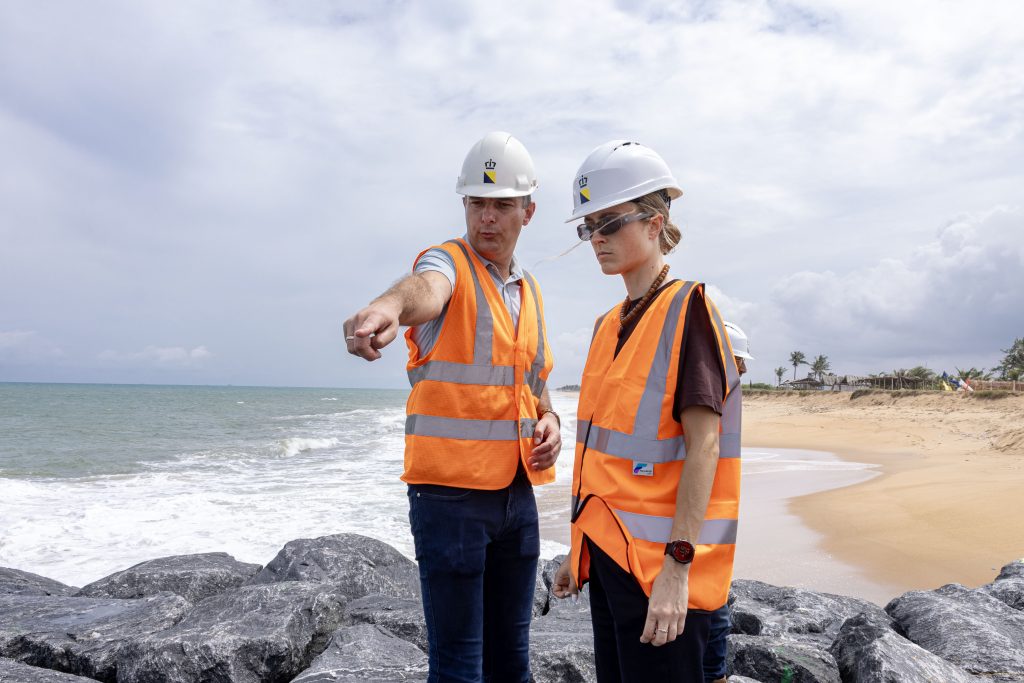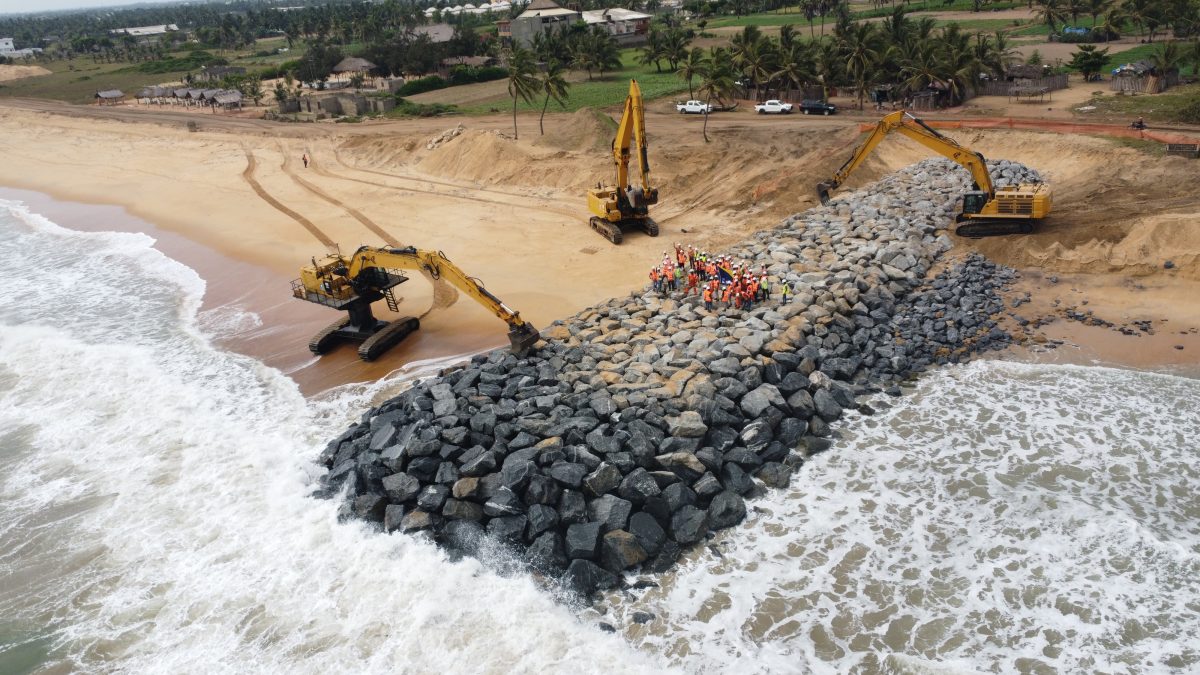
Coastal protection works in Togo have reached a major milestone, with construction now in its final stage and impact already clearly visible along one of West Africa’s most vulnerable shorelines. Implemented by Boskalis and co-financed by Invest International, the project is part of the West Africa Coastal Areas Management Program (WACA) and builds on earlier phases that combined engineered structures with nature-based solutions to strengthen resilience to accelerating erosion.
The current second phase is part of the Global Gateway flagship portfolio and is financed through a strong international partnership under the supervision of the World Bank Group. The French Development Agency (AFD) acts as co-financier, while Invest International (Public Programmes) stepped in to bridge a EUR 28 million funding gap through the ‘DRIVE’ infrastructure fund. The project centers on groyne construction and large-scale sand replenishment along a eleven-kilometre stretch east of Lomé, covering Gbodjomé, Agbodrafo, Kpémé, Goumoukopé and Aného.
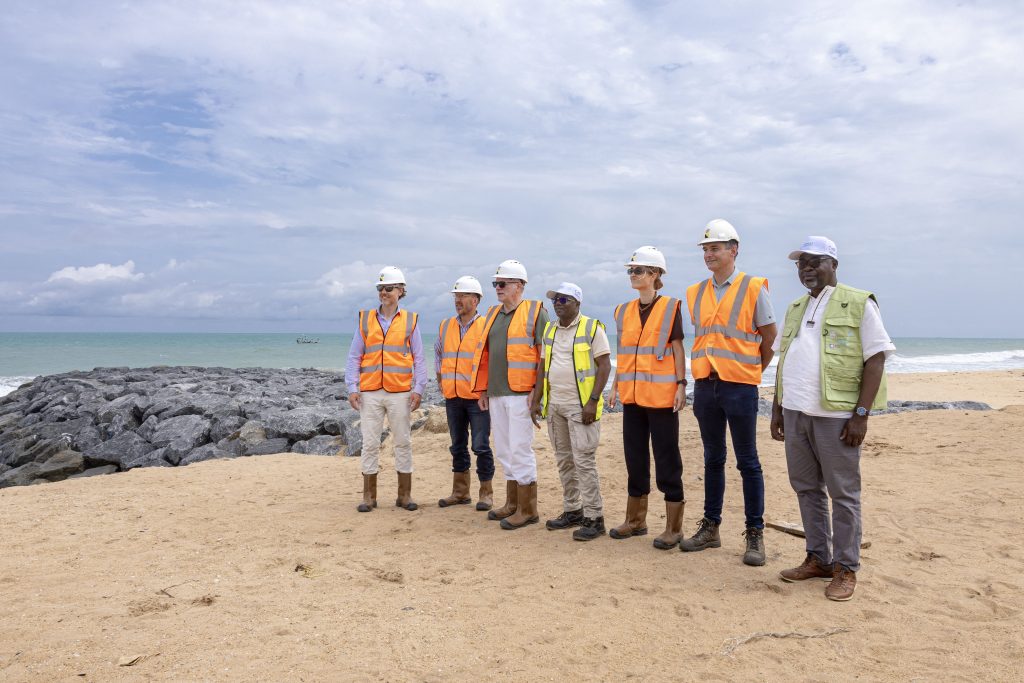
Building on proven coastal protection
Togo’s 56-kilometre coastline is home to nearly two million people, as well as critical infrastructure such as the port, airport, industrial zones and tourism assets. The area has long been highly vulnerable to coastal erosion and flooding, challenges that are intensifying due to climate change.
In response, West African countries launched the WACA initiative in 2015, supported by the World Bank Group, to create a coordinated regional approach to coastal protection. Since 2018, the World Bank and the Global Environment Facility (GEF) have financed USD 64.5 million in resilience efforts in Togo. Together with earlier works implemented by Boskalis under WACA and completed in 2023, these interventions have shown that coastlines can be effectively stabilized.
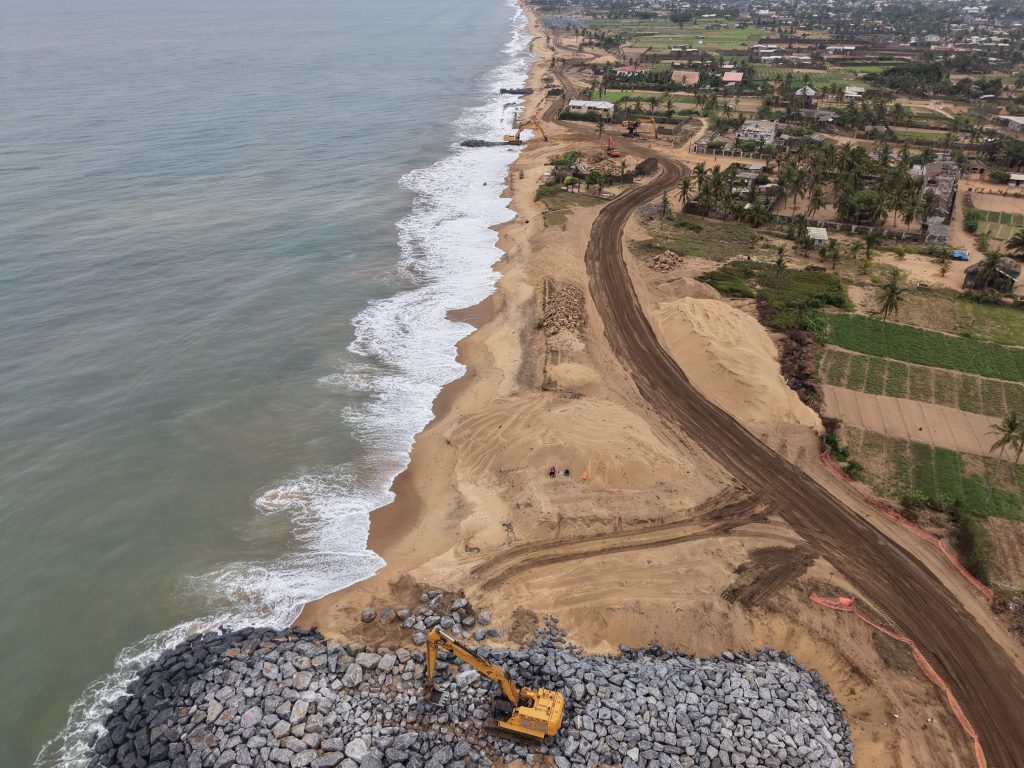
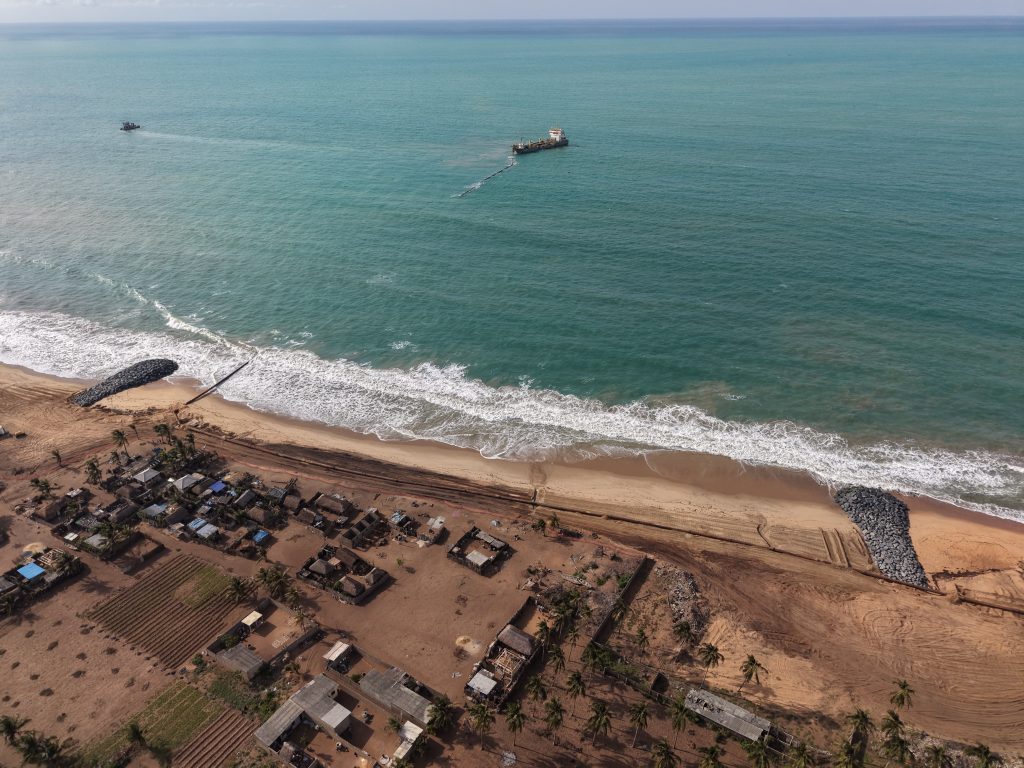
© Copyright image by Boskalis – Coastal Protection works in Togo.
Extending and strengthening protection
The current second phase builds directly on these results. It completes the earlier interventions and extends protection to additional high-risk coastal stretches, including a seven-kilometre section between Gbodjomé and Agbodrafo, as well as areas closer to Aného and the Benin border. The strong performance of the first phase led the Togolese authorities to continue working with Boskalis, ensuring continuity in expertise and execution.
Since November 2025, 21 of the 22 initially planned groynes have been completed. The scope has since been expanded to 26, with four additional groynes to be constructed in Kpémé to reinforce existing structures and prevent the displacement of erosion. In parallel, 750,000 m³ of infilling works in former lagoon arms and in the Adanhouso area of Aného have been completed. These areas have been rehabilitated and replanted with coconut trees across 10 hectares.
Protecting livelihoods and economic value
The impact of the project goes beyond coastal defense. By reinforcing the shoreline, it helps to:
- Protect homes, businesses and critical infrastructure,
- Preserve access to coastal land for economic activity,
- Safeguard livelihoods in fishing and agriculture, and
- Strengthen long-term climate resilience.
For communities along the coast, this means continued access to vital resources and income-generating activities that depend directly on the coastal environment.eans continued access to vital resources and income-generating activities that depend directly on the coastal environment.
A collaborative approach with impact at scale
The project reflects a strong collaboration between international financial institutions, the Togolese government and the private sector. By combining financing, technical expertise and local ownership, it demonstrates how large-scale climate adaptation projects can be effectively delivered.
As part of the broader WACA Program, the project also contributes to improved regional cooperation, helping West African countries better manage shared coastal challenges.
With its mix of proven engineering, innovative nature-based solutions and international partnership, the coastal protection works in Togo stand as clear example of how vulnerable coastlines can be protected while supporting sustainable economic development.