
From MRI scanners on their way to Ukraine to a factory in Ghana producing resilient crops. The projects supported by Invest International are highly diverse. Yet they all share the same principle: providing financing where the market is not yet able or willing to step in. On October 1st 2026 the organisation celebrates its fifth anniversary. Time for ceo Melanie Maas Geesteranus to look back but foremost look to the future with a Netherlands Investment Institution on the way.
Imagine you are a Dutch SME with ambitious plans abroad. Perhaps you want to open a branch in Ecuador, build a factory in Vietnam, or secure an export deal with a customer in Mozambique. Chances are you will soon encounter financing challenges. For new ventures in emerging markets like these, commercial banks are often reluctant to provide funding because the risks are considered too high.
That is where Invest International comes in. Established five years ago, the organisation has a clear mission: to help build markets where Dutch companies with strong business plans can grow internationally while contributing to economic development both abroad and at home.
Growing resilient crops
“We support Dutch companies looking to expand internationally through loans and other financing solutions,” says Melanie Maas Geesteranus, who has led Invest International for the past year. “We often work alongside commercial banks. In some cases, we may also take an equity stake in a company in exchange for capital. For export credit insurance, we work closely with Atradius Dutch State Business. When markets are still highly uncertain, entrepreneurs often cannot turn to their regular bank. That is where we step in.”
Over the past five years, numerous entrepreneurs have benefited from this approach. One example is Delft-based LG Sonic, founded by Yousef Yousef. The company uses ultrasonic technology to keep algae suspended in water, helping to combat pollution. “It is a fantastic technology,” says Maas Geesteranus. “To expand internationally, the company needed pre-financing, and that is why they approached us.”
Another example is Iribov, a biotechnology company specialising in plant breeding and tissue culture to develop more resilient crops. When the company wanted to build a production facility in Ghana, Invest International provided financing to help make it happen.
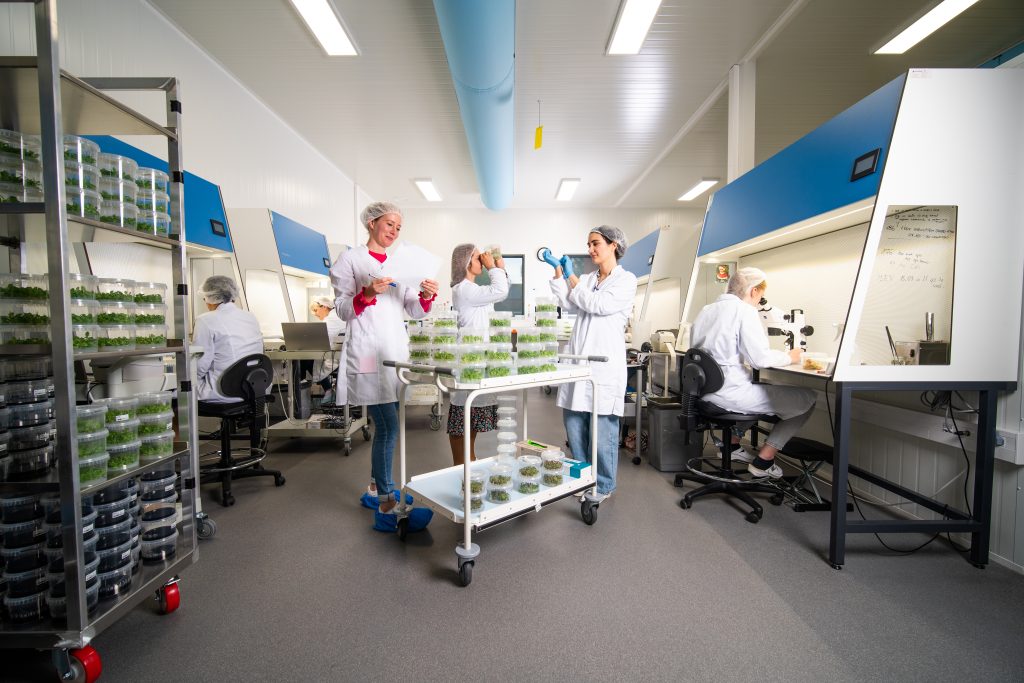
Iribov is a biotechnology company specialising in plant breeding and tissue culture to develop more resilient crops.
The same applies to Mosa Meat, the Limburg-based cultivated meat pioneer. Invest International provided a development contribution to explore international markets and support its transition from innovation to commercial application.
“And then there is Milence,” Maas Geesteranus adds. “They are building a European charging network for electric trucks. At this early stage, commercial banks are not yet able to finance those ambitions, so we step in.”
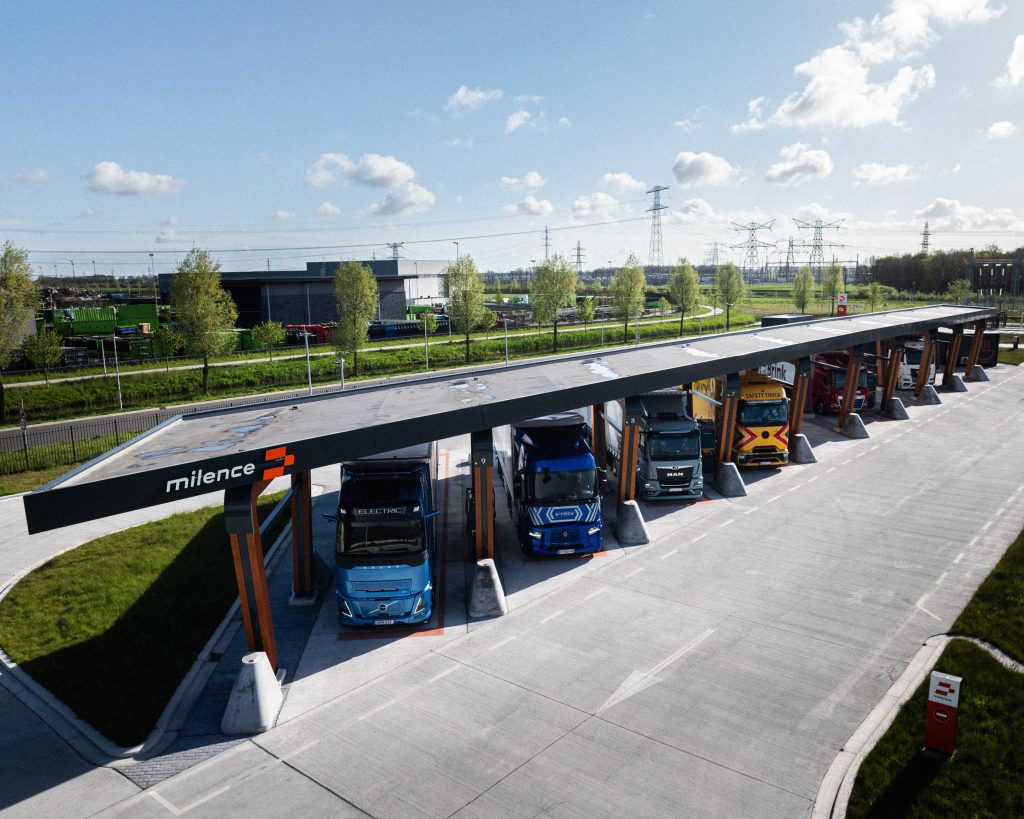
One financing example is Milence, which is building Europe’s largest public charging network for electric trucks.
Nearly €2 billion in five years
Beyond financing Dutch businesses, Invest International also plays a role in international development projects funded by the Netherlands.
“We work with countries on major transitions in areas such as energy, water, food systems and healthcare,” says Maas Geesteranus. “We do this through direct project funding rather than through governments. Dutch companies are often involved in these projects as well.”
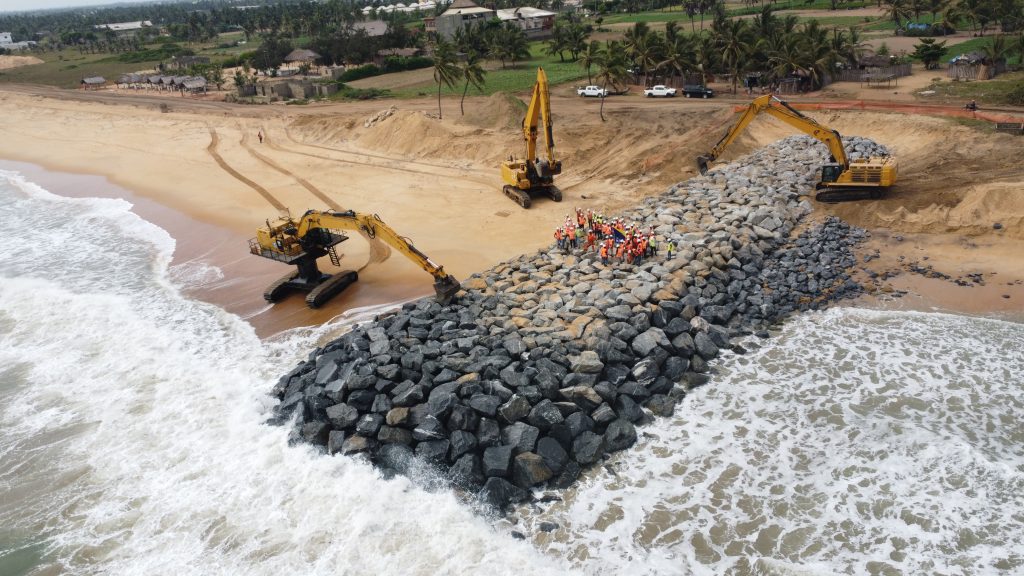
One example is a coastal protection project in Togo. Invest International works together with the World Bank, the French development bank Agence Française de Développement (AFD), and Boskalis, which is executing the project.
Five years in numbers
What does five years of Invest International look like in figures?
Nearly €1 billion has been committed to businesses through loans, equity investments and other financing structures. A similar amount has been allocated to international development projects. Around 400 Dutch companies have received financing, more than half of them SMEs. That number continues to grow, with around 100 new companies supported last year alone.
Invest International has also been profitable for four consecutive years. “One-third of the Dutch economy is earned internationally,” says Maas Geesteranus. “Last year, as much as half of economic growth came from exports of goods and services.” According to her, this helps explain why demand for Invest International’s services continues to increase.
Still, not every project is measured solely in financial terms. Philips, for example, received support for the delivery of MRI scanners to Ukraine, a transaction that would have been difficult for a commercial lender to facilitate. In the semiconductor industry, Invest International is also in discussions with various partners to help make the Netherlands and Europe less dependent on countries such as China. “We do not only look at what an investment means for a company,” says Maas Geesteranus. “We also consider the broader value it creates for society.”
Strengtening strategic resilience
Since taking office a year ago, Maas Geesteranus has introduced a renewed strategy. Financing businesses and international development projects remains the organisation’s foundation, but there is now an even stronger focus on the strategic value created for the Netherlands.
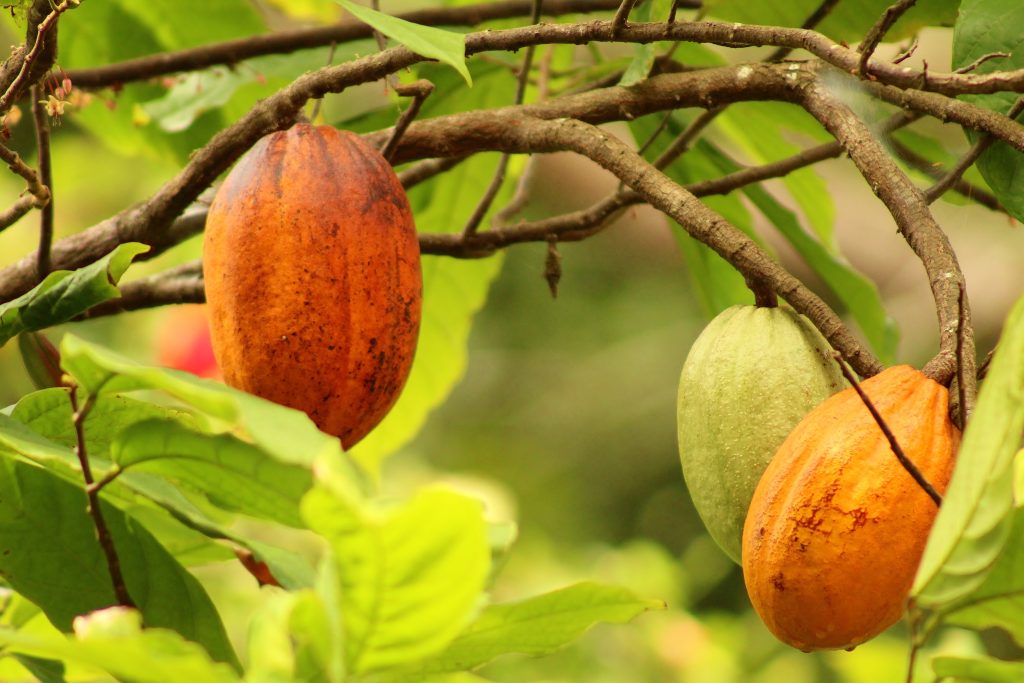
“If we invest in infrastructure somewhere, that can be the starting point for discussions about raw materials or food supply chains,” she explains. “In Côte d’Ivoire, for example, our participation in projects has contributed to stronger relationships with the government, which in turn supports trade relations. Côte d’Ivoire is an important supplier of cocoa beans for the Netherlands.”
The most significant change, however, is still ahead. Invest International is preparing to merge with Invest-NL, the other state-backed organisation that helps Dutch companies grow domestically through financing and private capital mobilisation.
The aim is to create a new Netherlands Investment Insitution (NII) within the next two years, the final name has yet to be decided. More important than the name is the idea behind it: a company should no longer need to switch between different organisations as it moves from startup funding to international expansion.
The integration is expected to create a single point of access for entrepreneurs, providing greater clarity and a more seamless financing journey. It also carries a financial ambition: by combining resources, the new organisation hopes to mobilise more private capital.
Risk capital with purpose
Naturally, most of this involves risk capital. And yes, not every investment succeeds.
“That does not mean we invest indiscriminately,” says Maas Geesteranus. Every proposal undergoes rigorous assessment by the investment committee against strict criteria covering management quality, financial position and country risk.
In addition, Invest International conducts its own due diligence. Teams visit projects on the ground to verify progress and assess compliance with ESG standards, including climate objectives and labour conditions.
“If it were always obvious that a project would succeed, a commercial financier would already be there,” Maas Geesteranus concludes. “But if you never take risks, nothing will happen.”
This article was originally published in MT Sprout (in Dutch) and written by journalist John van Schagen, September 2026.
