
In today’s fast-paced financial world, it’s easy to overlook the enduring power of traditional instruments. One such tool – the Bill of Exchange – has stood the test of time. Dating back to the 13th century, it remains a vital component of international trade finance, especially for small and medium-sized enterprises (SMEs). At Invest International, we actively use Bills of Exchange as part of our SME Export Finance Facility, helping Dutch businesses access new markets and secure international deals with confidence. Discover how Bills of Exchange continue to empower global trade – and how we put them to work for Dutch exporters.
Bill of Exchange & export
A Bill of Exchange (BoE) is a written, legally binding order from one party (the drawer) to another (the drawee) to pay a specified amount to a third party (the payee) at a future date.
Bills of Exchange may be traditional, but their relevance in today’s trade finance landscape is undeniable. For SMEs, they offer a structured, secure, and flexible way to manage international transactions for capital goods like machines. At Invest International, we actively use Bills of Exchange for our SME Export Facility in collaboration with OHV and Atradius Dutch State Business (DSB) to support Dutch exporters.
How does a Bill of Exchange work?
Export agreement: Dutch SME signs a deal with a foreign buyer.
Bill issuance: Exporter issues a Bill of Exchange.
Insurance: Atradius DSB insures the bill against non-payment.
Financing: OHV arranges advance payment; Invest International provides the funds.
Repayment: Buyer pays on maturity. If not, Atradius DSB covers the loss.
What are the benefits of Bills of Exchange?
- Improved Cash Flow: buyers can defer payment; sellers can access early funds.
- Legal Security: acts as enforceable proof of debt.
- Transferability: can be endorsed to third parties.
- Risk reduction: reduces uncertainty in international transactions.
- Trade enablement: encourages cross-border commerce.
- Discounting: exporters can receive early payment via banks or financiers.
Case: Go and Grow Farm Solutions
Go and Grow Farm Solutions, a Dutch SME known for its innovative multifunctional agricultural machinery, secured a promising export deal with a buyer in East Africa. The opportunity was significant—not only did it open doors to a new market, but it also aligned with the company’s mission to support sustainable farming practices globally.
However, like many international buyers, the East African client requested deferred payment terms. While common in cross-border trade, this posed a challenge for Go and Grow. As a growing SME, the company needed immediate working capital to continue production and fulfill other orders. Waiting several months for payment could strain their cash flow and slow down operations.
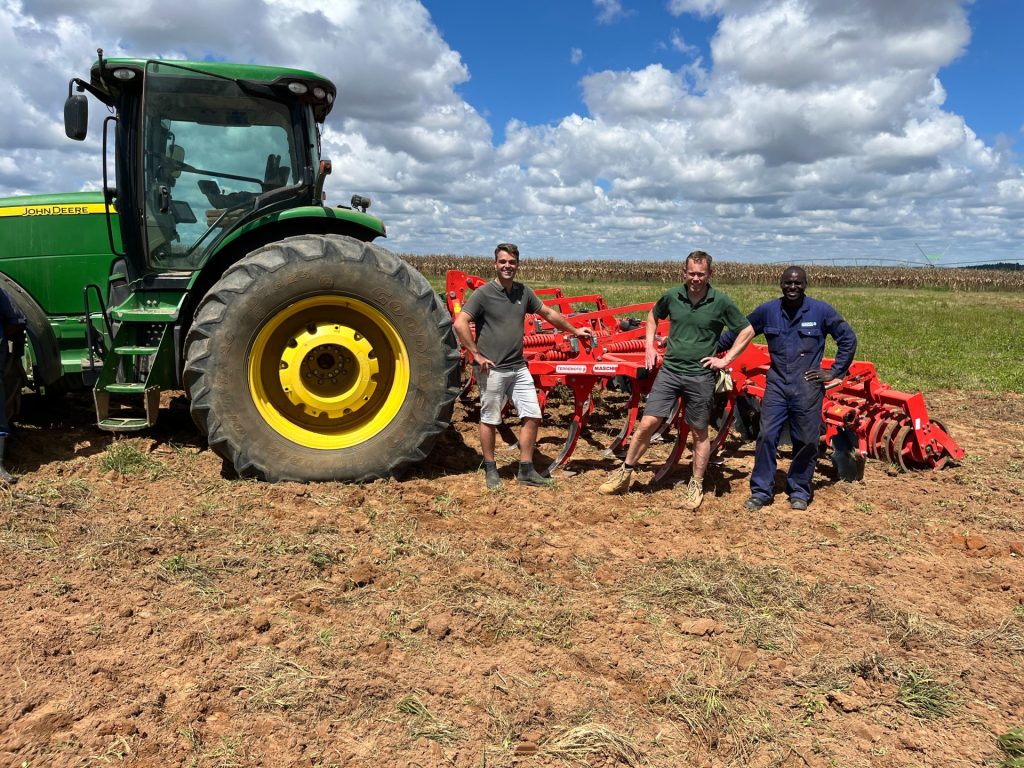
To bridge this gap, Go and Grow turned to the export finance facility offered by Invest International, in partnership with OHV and Atradius Dutch State Business (DSB). This facility was designed precisely for situations like theirs—where small to mid-sized exporters need financial flexibility without taking on excessive risk.
The solution began with the issuance of a Bill of Exchange to the buyer, specifying the amount due and the future payment date. Atradius DSB stepped in to insure the bill, providing a safety net in case the buyer failed to pay. With this insurance in place, OHV arranged for the bill to be discounted, and Invest International provided the upfront financing.
This meant that Go and Grow received immediate payment for their shipment—without having to wait for the buyer’s funds to arrive. Confident that the transaction was secure and the risk covered, they proceeded to deliver the equipment on time and in full.
The history of Bills of Exchange
- Bills of Exchange trace their roots back to the 13th century, emerging in the bustling trade hubs of Italy, particularly in cities like Florence, Venice, and Genoa. Merchants needed a way to safely transfer large sums of money across long distances without physically transporting gold or silver—an expensive and risky endeavor.
- Italian merchant-bankers developed the cambium, a precursor to the modern bill of exchange, which allowed a merchant to pay money in one city and have it repaid in another, often in a different currency and at a future date.

- By the 14th and 15th centuries, the use of Bills of Exchange had spread across Europe. They became a cornerstone of international trade, especially among merchants in Flanders, France, England, and the Hanseatic League. These instruments enabled cross-border commerce and helped standardize financial practices.
- In the 18th and 19th centuries, Bills of Exchange were formally codified in national laws. One of the most influential legal frameworks was the Bills of Exchange Act 1882 in the United Kingdom, which still governs their use today in many common law jurisdictions.
Despite the rise of digital payments and electronic trade finance, Bills of Exchange remain relevant – especially in SME export finance, emerging markets, and structured trade transactions. Their legal enforceability, transferability, and adaptability continue to make them a trusted tool in global commerce.
FAQ: Bills of Exchange
What is the main advantage of using a Bill of Exchange? It provides a secure, legally enforceable way to defer payment while maintaining cash flow flexibility.
Can a Bill of Exchange be used for small transactions? Yes. The facility offered by Invest International with OHV and Atradius Dutch State Business supports transactions up to €5 million – ideal for SMEs.
What happens if the buyer doesn’t pay? Atradius Dutch State Business provides insurance coverage, ensuring the exporter or financier is protected.
Is a Bill of Exchange the same as an invoice? No. An invoice is a request for payment, while a Bill of Exchange is a binding order to pay at a future date.


